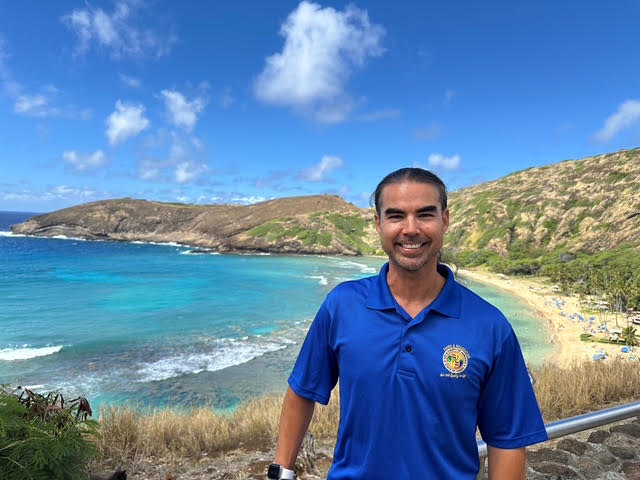
Friends of Hanauma Bay recently invited Nicholas Tosaya, M.P.A., Regional Park Manager of Hanauma Bay Nature Preserve, to share his perspective on his new role, his early experiences at the preserve, and his priorities for the future. Below are the questions they asked, along with his responses.
Tosaya Q&A
1. What drew you to this opportunity at Hanauma Bay?
Hanauma Bay is a gem. It is great to be part of the history of preserving this jewel for future generations. There are also many challenges to navigate, which I anticipate keeping the job interesting for years to come. With Parks and Recreation, you have the opportunity to learn about natural resources, the community, and no day is the same.
2. How has your previous experience prepared you for this role?
I have been a parks and recreation supervisor for 15 years from Southern California to Washington State. I have overseen urban parks with a focus on direct service, rural parks which emphasized large events and passive use, and a multi-sport ballfield complex that saw 500,000 users annually.
Hanauma Bay Nature Preserve is unique, but it allows me to use the assortment of skills I have learned over the years while providing opportunities for learning new things. In my previous role, I was responsible for recreation, maintenance, and budget oversight, so in this is in my wheelhouse in various ways.
3. What excites you most about working in a marine sanctuary for the first time?
In a lot of places, there are stakeholders competing for finite resources. At Hanauma Bay, the designation as a Marine Life Conservation District keeps the focus on the preservation of the Bay. This is especially true after Hanauma Bay was able to reset during COVID. Once people started coming back, there was appreciation for how Hanauma Bay could be, if we all keep doing our part. This is what is most exciting: we can keep the health and beauty of Hanauma Bay front and center.
4. What have been your first impressions of Hanauma Bay so far?
There are many first impressions. I understand why the demand for Hanauma Bay is so high. The beauty of Hanauma Bay is undeniable. I love coming to work and saying “hi” to the Bay, first thing in the morning. The upper picnic area under the kiawe trees does not get enough attention. If it were a regular park, it would be crowded every day.
5. What’s been a “wow” moment for you since arriving?
I was really surprised by how many people who work and volunteer at Hanauma Bay love Hanauma Bay. They take pride in the experience they are able to provide to our guests.
The second “wow” moment was when I came face to face with a juvenile rockmover wrasse. It looked like something out of a Jim Henson creation. Of course it was a day I didn’t bring my camera with me.
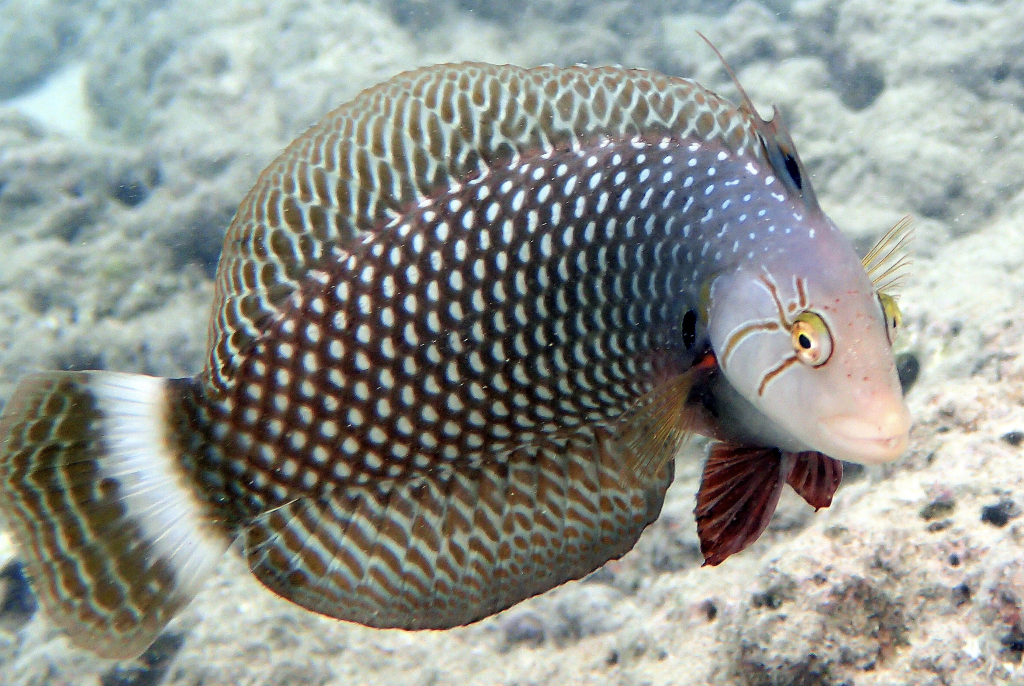
Courtesy of the Dear Ocean Digital Coral Ark – Contributed by Anke Roberts https://www.dearocean.org/hanauma-bay
6. What surprised you most about the transition from land-based parks to a marine environment?
The amount of maintenance the beach takes. The Kona low storms had crews from our Parks and Recreation Maintenance Support Services out to fix the beach pretty regularly, in addition to the weekly beach grooming. The massive ruts that form in a strong rain storm was quite surprising.
7. What are your top priorities as you get started?
My priorities are to understand why things work the way they do. There are a lot of systems in place, so understanding how they evolved is important for avoiding unforeseen consequences when it is time to make modifications.
8. How are you getting up to speed on the bay’s unique ecosystem?
Speaking to as many informed people as possible. From staff, to volunteers, the outgoing education program, marine life professionals (such as those conducting the carrying capacity studies), and the Friends of Hanauma Bay. Everyone has their specialties, but everyone has the common goal of making the Bay the best it can be.
9. Have you had a chance to snorkel the bay yet?
I have it timed to be able to go during my lunch break. I can be in the water for about 20 minutes and I try to get in the water twice a week.
10. How do you approach balancing conservation with visitor experience?
This is an important question. I see maintaining the sustainability of the ecosystem is the top priority of an MLCD. So, from my point of view, the first step of developing an improvement to the visitor experience is to assess what are the threats to sustainability of the Bay and how can they be mitigated? If we decide to move forward, how do we monitor potential impacts to the Bay? After a change is implemented, do not be afraid to be wrong. If I made a decision and there were unforeseen consequences or mitigation efforts were not as effective as planned, then being willing to recognize the challenges and change direction. Sometimes there is a way to pivot, sometimes you just have to go back to the way things were; it will depend on the situation. But the important part is being willing to put everyone’s ego to the side and look at what is really happening.
11. What lessons from your previous role do you hope to bring here?
Beware of paralysis by analysis. It is important to be informed before making decisions, but very often information will not be perfect and perfect solutions do not magically appear. You have to make a decision and move forward.
Support your team and they will support you.
12. What’s been the biggest learning curve so far?
Regulating admissions I think has been the biggest learning curve. This includes admission tickets, parking booths, checking-in presales and kamaʻāina, permitted groups, and becoming familiar with the logistics of bringing guests through the orientation process at precise times.
13. How do you like to connect with your team?
I think meeting with them in a variety of ways is the best way to find a way that works best. For example, I meet weekly with the Hanauma Bay Leadership Team, I meet with everyone for one-on-one time, and I try and check-in sporadically during their day. I find that the type of interaction allows folks the opportunity to feel comfortable providing different types of information.
14. What’s one small change visitors might notice in the near future?
I’m sorry, but I have to pick two. We have been really fortunate to have the Parks and Recreation Division of Urban Forestry’s Landscaping Crew re-work the area between the Visitor Center and the Bay. They are not done yet, but it is looking great and will provide an enhanced visual experience.
Second, our rebranded education program is called Papahana Hanauma and is being led by Hui Mālama O Ke Kai Foundation. During orientation, guests are taught Hawaiian words to help instill a greater sense of inclusion and responsibility for the care of the Bay.
15. What does a great day at Hanauma Bay look like to you?
A great day is great weather, calm water, and guests enjoying a safe day of getting to know the beauty and wonder of the variety of life here at the Bay. And if I am able to get in the Bay on my lunch break, so much the better.
16. When you’re not working, how are you enjoying life here so far?
Life in Hawai’i is great. The people, the weather, and the beaches put a smile on my face every day. I look forward to learning more about Hawaiian culture and seeing more beautiful sites around the state.